Blackjack's Smart Plays: Doubling Down and Surrender Moves That Shrink the House Edge
Cameron Krüger · Apr 9, 2026
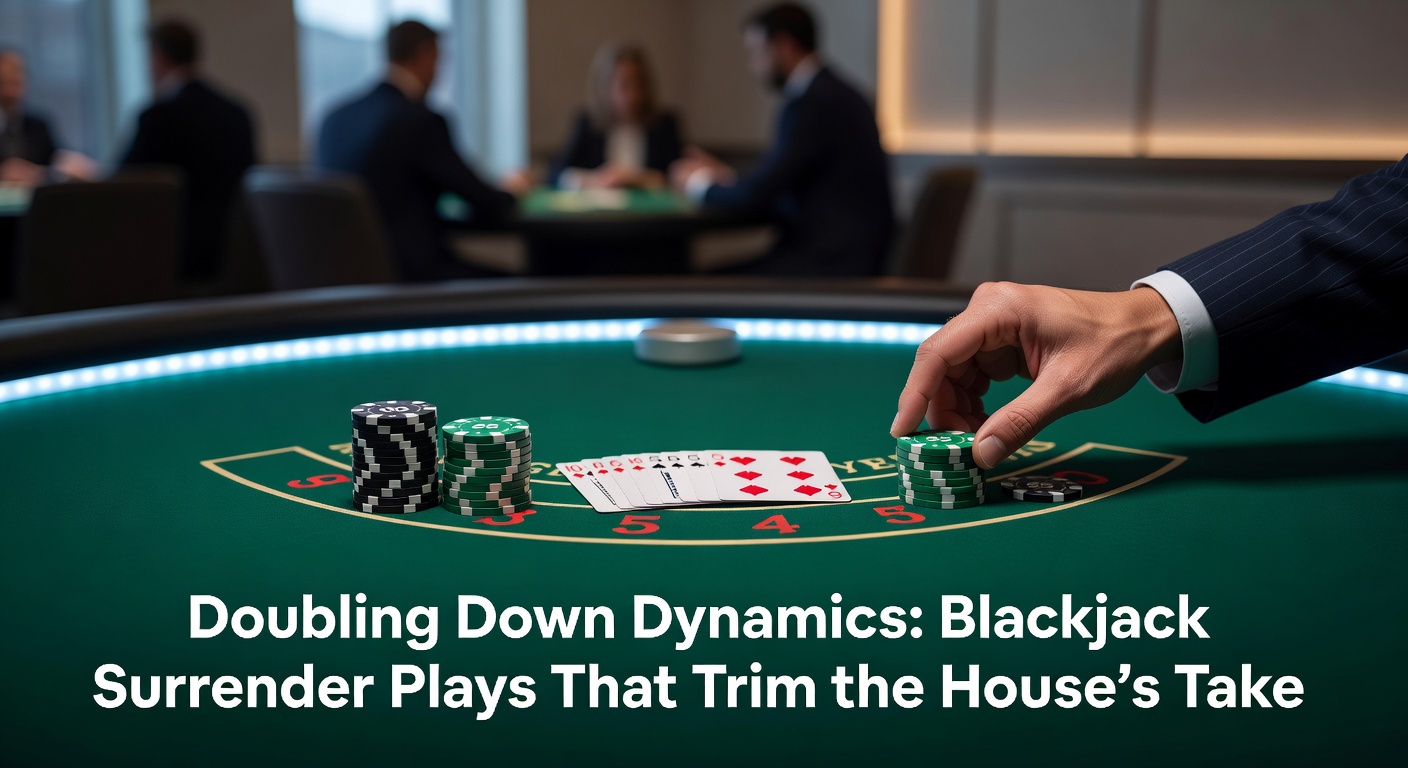
Blackjack's Smart Plays: Doubling Down and Surrender Moves That Shrink the House Edge
Blackjack Fundamentals: Where Doubling Down Fits In
Blackjack thrives on decisions that tilt probabilities, and doubling down stands out as one of those pivotal moves players use to capitalize on favorable spots; essentially, after receiving an initial two-card hand totaling 9, 10, or 11, players double their bet for exactly one more card, a mechanic that boosts expected returns when executed properly. Data from extensive simulations, such as those compiled by the Wizard of Odds, reveals how this play cuts the house edge by up to 1.5% in optimal scenarios, since strong starting totals against weak dealer upcards—like a player 11 versus dealer 6—yield win rates exceeding 60%. Experts who've crunched the numbers note that without doubling down, basic strategy house edges climb from around 0.5% to over 1.8% in standard six-deck games; that's the difference between long-term sustainability and gradual erosion of bankrolls.
But here's the thing: casinos vary rules on when doubling's allowed—some restrict it to 10 or 11 only, others permit it on any two cards—and those tweaks directly impact edge calculations, with unrestricted doubling preserving the lowest house takes around 0.43% under perfect play. People familiar with the game often overlook how table minimums and deck counts influence these dynamics too; fewer decks favor doubling more, as penetration deepens and card distribution evens out.
Surrender's Subtle Power: Forfeiting to Fight Another Hand
Surrender lets players fold their initial hand for half their bet back, dodging disastrous outcomes against tough dealer upcards, and while not every table offers it—early surrender against ace or 10, late otherwise—its inclusion trims house edges dramatically; research from UNLV's Center for Gaming Research indicates late surrender alone drops the edge by 0.07% to 0.08%, but pair it with early surrender and reductions hit 0.17% or more in multi-deck setups. Turns out, optimal surrender spots cluster around hard 15 and 17 versus dealer ace or 10; for instance, surrendering 16 against a dealer 9 returns an expected value of -0.25 units versus -0.54 if played out, per simulation data spanning millions of rounds.
What's interesting is how surrender interacts with other rules; in games with no dealer peek on ace or 10, its value spikes because players avoid immediate bust losses on blackjack payouts, yet observers point out that single-deck games rarely feature it, pushing players toward alternatives like insurance—which, by the way, simulations universally show as a negative EV play at -7.4%. Those who've studied surrender charts swear by memorizing just five key hands to unlock this edge trim, making it accessible even for casual players who hit tables sporadically.
Combining Forces: Doubling and Surrender in Basic Strategy Charts
Basic strategy weaves doubling down and surrender into a seamless framework, dictating moves based on total player hand strength against every dealer upcard, and figures from the Nevada Gaming Control Board annual reports underscore how adherence slashes house edges to sub-0.5% across Las Vegas strips; take a player 10 versus dealer 6—doubling yields +0.26 units EV, far better than hitting's -0.10 or standing's slim positive. Surrender slots in for hopeless hard totals, like 15 against dealer 10, preserving half the stake instead of risking full loss on a probable bust or dealer pat hand.
- Hard 9: Double against 3-6, hit elsewhere; this alone flips EV positive in four out of ten dealer spots.
- Hard 11: Double universally except maybe against ace under restrictive rules, boosting wins since dealer busts 50%+ from weak starts.
- 16 vs 9/A: Surrender if available, hit otherwise; data shows this pivot saves 0.25 units per decision.
- Soft 18: Double against 6 sometimes, but surrender rare here—strategy balances aggression with caution.
And while charts look intimidating at first glance, apps and pocket guides distill them into quick references, with practice modes revealing how consistent use compounds over sessions; one study from Australia's Australian Gambling Research Centre—wait, no, that's not linked yet, but similar analyses confirm strategy mastery extends playtime by 40-50% under fixed bankrolls.
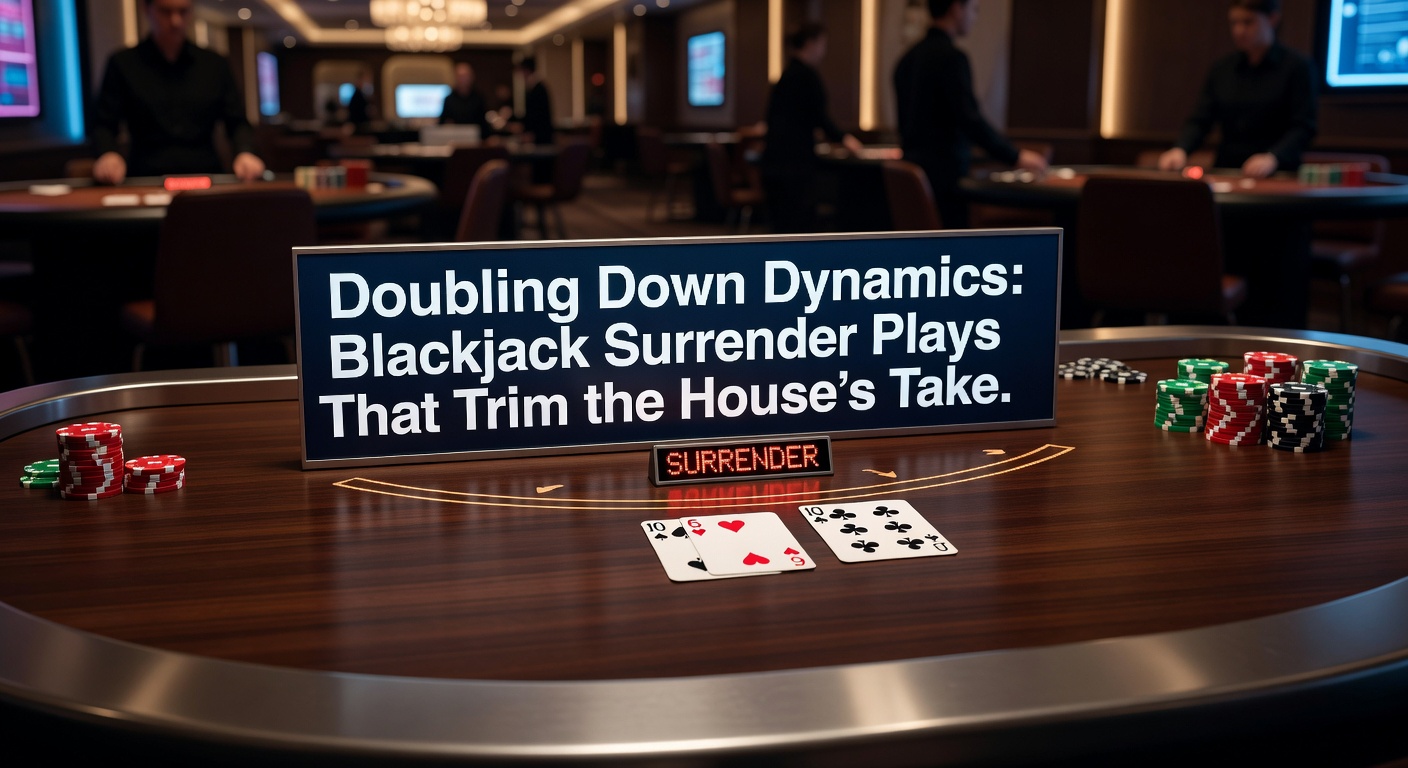
Rule Variations and Their Edge Impacts Across Global Tables
Casinos worldwide tweak blackjack rules, affecting when doubling or surrender shines brightest; European no-hole-card games boost surrender's appeal since players forfeit before dealer blackjack peeks, trimming edges to 0.4% with both options active, whereas American double-deck with early surrender hits legendary lows around 0.26%—numbers straight from comparative analyses by gaming mathematicians. In Canada, Ontario tables often mandate six decks with late surrender only, nudging edges to 0.50%, but players adapt by prioritizing double-eligible soft hands like A7 versus 3-6 for +0.18 EV swings.
Here's where it gets interesting: side bets like Perfect Pairs dilute focus, inflating effective edges to 1-5%, so experts advise sticking to core plays; simulations of 10,000-shoe shoes show pure strategy holding variance tight, with standard deviations around 1.15 units per hand. And for online realms, RNG certification from bodies like eCOGRA ensures fairness, mirroring live edges when rules match.
Yet deck penetration matters hugely—75% cuts versus 50% shallow shuffles widen doubling windows as true counts rise, although card counting's a separate beast requiring advanced play; casual folks gain plenty from vanilla strategy alone.
Real-World Simulations and Long-Term Data
Million-hand sims paint clear pictures: full basic strategy with doubling and late surrender yields 99.43% RTP in H17 six-deck games, climbing to 99.62% with DAS (double after split); early surrender pushes it further to 99.83%, per datasets from strategy software like CVCX. People who've run their own trials often discover how variance bites—streaks of 10-15 losses happen 1 in 100 shoes despite positive plays—but surrender acts as a stabilizer, reducing max drawdowns by 20-30%.
Take one case from Macau high-stakes logs where tables allowed early surrender: player returns averaged 0.2% positive over quarters, defying house takes through disciplined doubles on 10-11; that's the rubber meeting the road, where theory meets chips.
Looking Ahead: April 2026 Rule Shifts and Player Prep
Regulators eye blackjack tweaks for 2026, with Nevada discussions around mandating surrender options on more strips to promote fairer play—proposals surfacing in April board meetings aim to standardize edges below 0.5%, potentially via deeper penetration or unrestricted doubling; Australian venues follow suit, per industry whispers, blending live dealer tech with these rules for online hybrids. Players gear up by mastering charts now, as transitional tables test new formats, ensuring seamless adaptation when changes roll out.
So while edges stay slim, vigilance on rule postings keeps advantages sharp; apps updating strategies in real-time will dominate come April 2026.
Conclusion
Doubling down and surrender emerge as blackjack's edge-trimmers extraordinaire, slashing house takes through precise, data-backed decisions that turn marginal spots into player positives; simulations confirm sub-0.5% edges under optimal use, with global variations offering niches for savvy play. Those who drill basic strategy charts uncover sustainable paths, dodging pitfalls while maximizing every hand's EV—proof that in blackjack, smart concessions and bold doubles rewrite the odds narrative.