Mobile Interface Design Factors Affecting Speed of Bonus Claim Decisions
Casey Keller · Aug 10, 2026

Mobile Interface Design Factors Affecting Speed of Bonus Claim Decisions
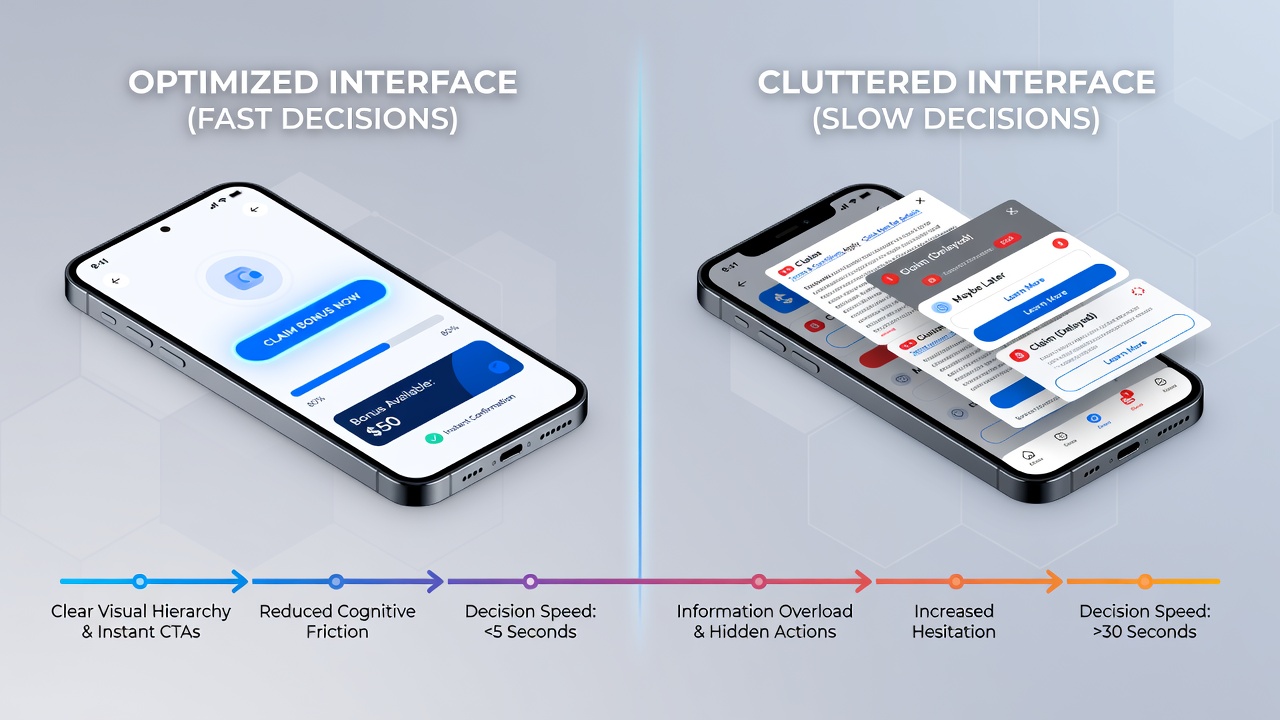
Design choices in mobile interfaces directly influence how fast users complete bonus claim steps in digital gaming environments, and multiple studies track these patterns through user behavior metrics. App developers arrange elements such as button size, color contrast, and menu depth because data from interaction logs show these features alter completion rates within seconds. Observers note that streamlined layouts reduce hesitation points while cluttered screens extend the time between initial prompt and final confirmation.
Button Placement and Visual Hierarchy
Button placement dictates initial decision speed because users scan screens in predictable patterns according to eye-tracking research conducted across gaming applications. Large, centrally positioned claim buttons that appear immediately after login prompts cut decision intervals by guiding attention without extra scrolling. In contrast, options buried under multiple taps force additional cognitive steps that compound over repeated sessions. Color contrast plays a supporting role here, and high-visibility hues paired with clear labels help users recognize the action faster than muted or competing visual elements. One analysis of mobile gaming sessions revealed that interfaces with prominent primary buttons achieved higher completion velocity compared to those relying on secondary navigation paths.
Notification Timing and On-Screen Prompts
Notification systems shape decision speed through their delivery timing and content density, since push alerts or in-app banners arrive at moments when users remain engaged with the platform. Brief, direct messages that include eligibility details and a single tap option accelerate the path from awareness to claim, whereas lengthy descriptions or delayed pop-ups create friction that extends processing time. Researchers tracking session data found that well-timed prompts integrated into the main dashboard reduced average claim duration, while off-screen or poorly sequenced alerts led to higher abandonment after the initial tap. These patterns hold across different device sizes because smaller screens amplify the impact of overlapping elements that obscure key information.
Loading Sequences and Confirmation Steps
Loading sequences and confirmation flows determine whether momentum carries through to completion, and progressive indicators that display real-time status keep users oriented during brief delays. Interfaces that minimize intermediate verification screens allow decisions to resolve in fewer actions, yet those requiring repeated password entries or additional consent layers insert pauses that slow overall progress. Data indicates that seamless transitions between claim initiation and reward allocation maintain user focus, while interruptions from network checks or separate verification pages increase the total time spent. In August 2026, updates to mobile gaming platforms highlighted how optimized loading reduced these bottlenecks in several regional markets.
Menu Depth and Navigation Efficiency
Menu depth affects how quickly users locate bonus options because deeper hierarchies require more taps and mental mapping before reaching the claim screen. Flat navigation structures that surface promotions on the home view shorten this discovery phase, and swipe gestures or persistent side panels further compress the steps involved. Studies from academic sources such as those published through University of Nevada research initiatives examined navigation patterns and confirmed that reduced layer counts correlate with faster decision execution. Users who encounter excessive submenus often pause to reassess their route, which extends the interval from prompt to action.
Adaptive Elements and Personalization Effects
Adaptive elements personalize the interface based on prior behavior, and this tailoring influences decision speed by presenting relevant bonuses without requiring manual searches. Dynamic layouts that reorder sections according to frequency of use guide users toward familiar paths, while static designs leave individuals to repeat exploratory clicks each session. Reports compiled by industry groups like the American Gaming Association document how personalization features streamline claim processes across varied user groups. These adjustments rely on stored preferences that surface options immediately upon login, thereby limiting the time spent evaluating alternatives.
Conclusion
Interface designs continue to evolve in response to measured user interactions, and the accumulated evidence shows that specific layout and notification strategies consistently affect the pace of bonus claim decisions on mobile platforms. Developers reference these patterns when refining applications because performance metrics provide clear indicators of which configurations support quicker resolutions. As platforms update features through 2026 and beyond, ongoing analysis of interaction data will track further refinements in how visual and structural choices guide user actions.