Optimizing Returns Through Strategic Selection of Multi-Hand Video Poker Variants
Viktor Krüger · Aug 6, 2026

Optimizing Returns Through Strategic Selection of Multi-Hand Video Poker Variants
Multi-hand video poker variants allow players to engage several hands at once on a single deal, which alters bankroll dynamics while preserving the same per-hand return percentages found in single-hand formats, and operators have expanded these options across both land-based and online platforms since early 2025.
Core Mechanics of Multi-Hand Play
Each hand operates independently after the initial deal and draw decisions, yet the shared deck and betting structure create distinct variance patterns compared with traditional single-hand machines, according to data compiled by the Nevada Gaming Control Board on machine performance metrics. Players select the number of hands, typically ranging from three to one hundred, and adjust coin denominations accordingly, which directly influences total wager size per round without changing the underlying probabilities of card combinations.
Paytables remain identical across hands in most configurations, so the theoretical return to player stays constant per hand, but cumulative outcomes fluctuate more rapidly because multiple results resolve simultaneously. This setup requires precise bankroll allocation, since a single round can consume five or ten times the stake of a standard game while delivering returns distributed across the bundle of hands.
Variant Comparison and Return Profiles
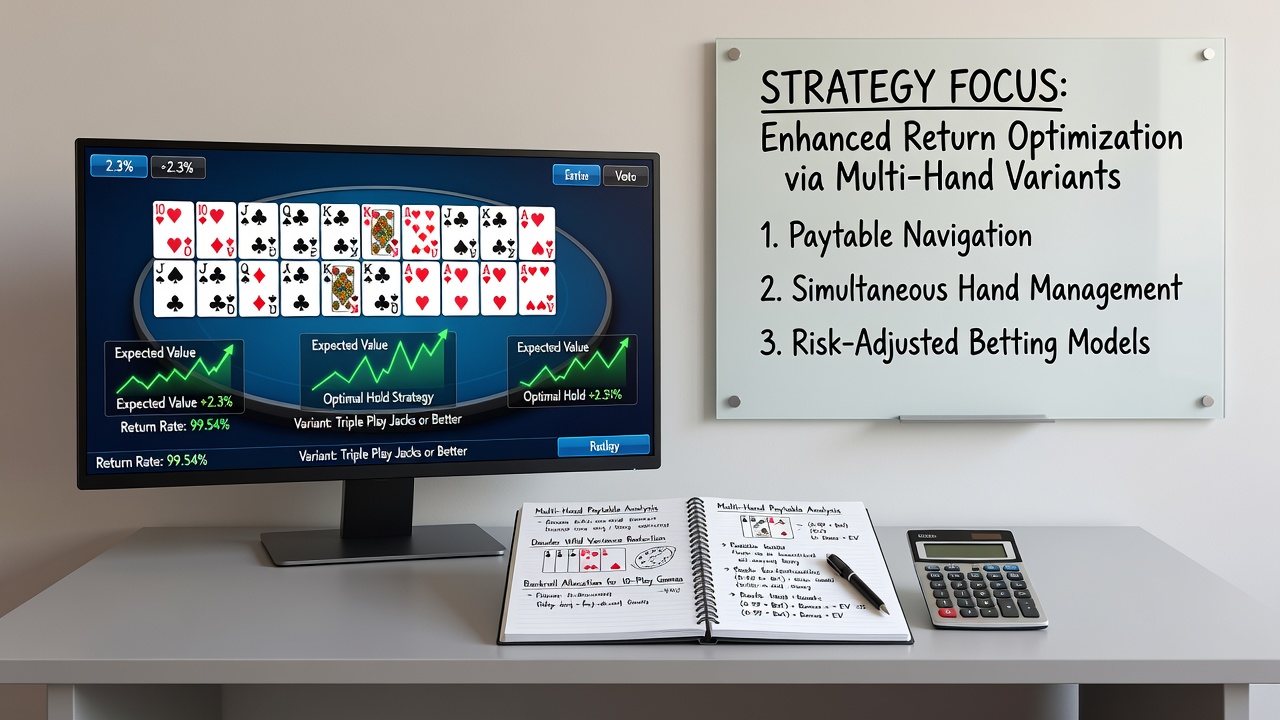
Jacks or Better, Deuces Wild, and Double Double Bonus Poker represent the most common bases for multi-hand implementations, with each carrying distinct paytable structures that determine long-term returns when played at optimal strategy. Full-pay versions of Jacks or Better continue to deliver 99.54 percent theoretical returns in select multi-hand cabinets, while Deuces Wild variants often reach 100.76 percent when specific paytables are located, though availability differs by jurisdiction and operator.
Observers note that Five Play and Ten Play formats accelerate play volume without altering individual hand odds, which suits players seeking higher action levels within fixed session durations. Data from industry reports indicates that machines offering one hundred hands compress variance into shorter time frames, producing larger short-term swings that demand tighter adherence to strategy charts.
Bankroll Management and Session Planning
Effective navigation begins with matching variant choice to available funds, since multi-hand play multiplies exposure per round while the per-hand return percentage stays fixed. Those who studied session data from regulated markets report that players maintaining at least 400 to 600 times the total per-round wager in reserves encounter fewer premature terminations during downswings common to these formats.
Progressive jackpot linkages occasionally appear in multi-hand setups, yet the base game returns often decline slightly to fund the side prize, creating a trade-off that requires direct comparison of posted paytables before commitment. August 2026 saw several North American operators adjust multi-hand configurations following updated compliance guidelines from the Nevada Gaming Control Board, which clarified minimum return thresholds for linked progressive systems.
Strategy Adaptation Across Hand Counts
Optimal hold decisions remain consistent regardless of hand quantity, yet the psychological pressure of managing simultaneous outcomes increases, prompting researchers to recommend printed or digital strategy references during extended sessions. A study released by the University of Nevada, Las Vegas Center for Gaming Research in late 2025 examined multi-hand play patterns and found that adherence to published charts preserved expected returns across all tested hand counts when players avoided impulsive deviations.
Software tools that overlay strategy recommendations now integrate directly into many online multi-hand platforms, reducing error rates that previously eroded theoretical returns in high-volume formats. Regulatory bodies in Ontario and several Australian states have required clear disclosure of these tools in player interfaces since mid-2025, ensuring consistent access to decision support across regions.
Conclusion
Selecting the appropriate multi-hand variant involves aligning paytable quality, hand count, and bankroll capacity to sustain play through normal variance cycles while preserving the machine's theoretical return. Continued monitoring of regulatory updates and machine performance data supports informed decisions that maximize long-term outcomes without reliance on short-term results.