UK's Stricter Gambling Regulations Set to Squeeze Smaller Casino Operators with 40% Duty Hike in April 2026
Mara Beck · Mar 11, 2026

UK's Stricter Gambling Regulations Set to Squeeze Smaller Casino Operators with 40% Duty Hike in April 2026
The Push for Player Protection Drives Major Regulatory Overhaul
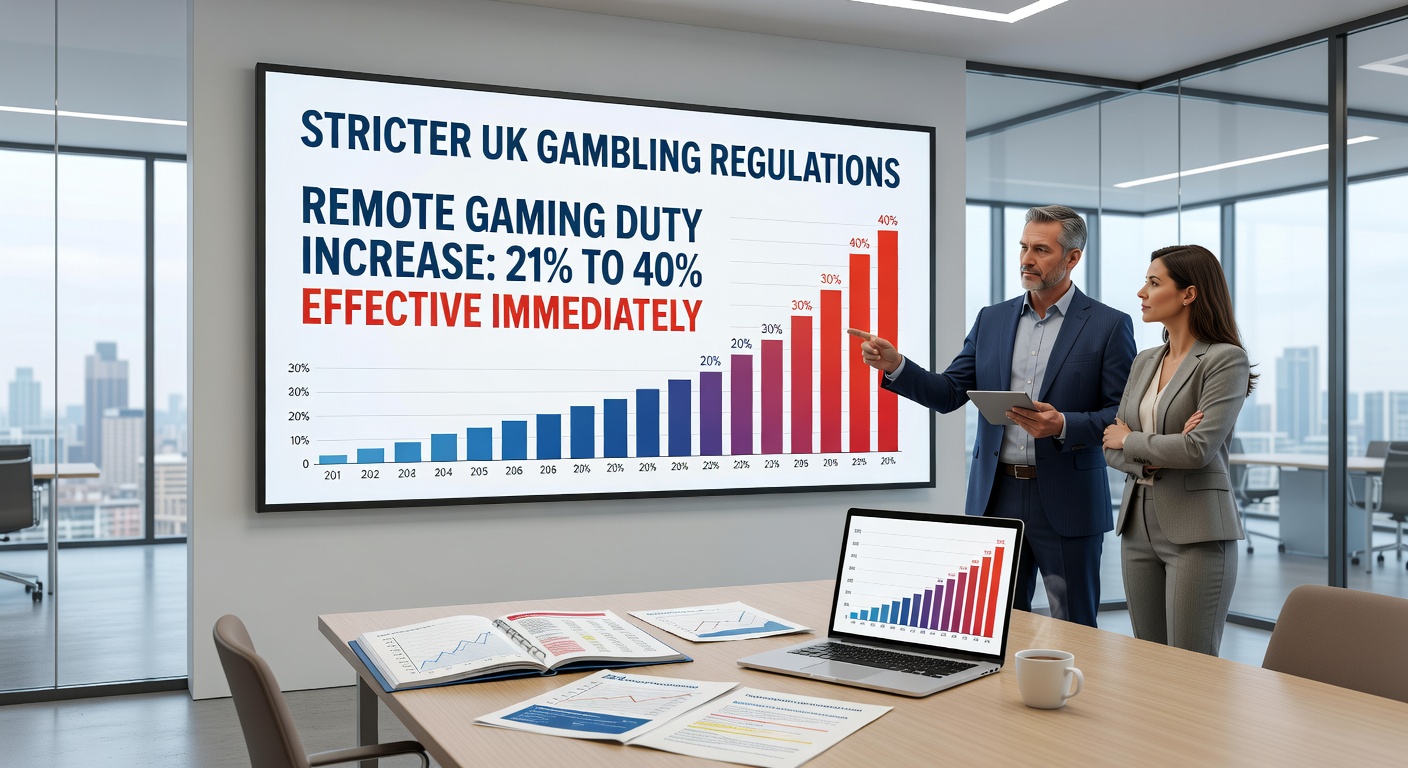
Stricter gambling rules in the UK target player safety through a series of measures that ramp up costs for casino operators, particularly those running remote gaming platforms; the Remote Gaming Duty, for instance, jumps from 21% to 40% starting April 2026, a change that hits revenue streams hard while affordability checks, marketing curbs, and tougher anti-money laundering protocols pile on compliance burdens. Observers note how these shifts, overseen by the UK Gambling Commission, aim to shield players from harm, yet they create uneven playing fields across the sector.
What's interesting is the timing; with preparations ramping up now, operators scramble to adjust systems before the April deadline, and some point to March 2026 as a key prep month when final audits and tech upgrades often peak. Data from industry reports reveals that smaller firms, handling fewer players but facing identical checks, absorb these costs at higher relative rates, turning what should be protective measures into survival challenges.
Breaking Down the Remote Gaming Duty Surge and Its Ripple Effects
The Remote Gaming Duty increase stands out as the headline change, pushing the tax on online casino profits from 21% to 40%, a near-doubling that slashes margins for operators reliant on digital platforms; but that's just the start, since affordability checks now demand real-time financial scrutiny for players, marketing restrictions ban targeted ads based on vulnerability data, and anti-money laundering measures require enhanced ID verification plus transaction monitoring that demands sophisticated software. Experts who've tracked these reforms observe how larger operators like Entain or Flutter Entertainment deploy dedicated compliance teams and AI tools to handle the load, whereas smaller outfits struggle with budgets that barely cover basics.
Take one mid-sized remote casino operator in the Midlands; figures show they spent 15% of revenue on compliance last year, a number projected to double post-2026, according to sector analyses. And here's the thing: while big players consolidate resources across global arms, independents face choices like raising player fees or cutting bonuses, moves that drive customers away in a competitive market.
How Compliance Costs Disproportionately Burden the Little Guys
Affordability checks form the core of the new regime, requiring operators to assess player spending limits via credit data and self-declarations, a process that smaller casinos implement with off-the-shelf software costing thousands monthly; marketing restrictions, meanwhile, prohibit bonuses tied to deposit volumes or personalized offers flagged as risky, forcing redesigns of promo strategies that once fueled growth. Anti-money laundering rules escalate too, with mandates for source-of-funds proof on deposits over certain thresholds, something that demands legal expertise and audit trails beyond the reach of firms with under 50 staff.
Research indicates smaller operators incur compliance expenses at rates 2-3 times higher per player than giants, since fixed costs like licensing fees and software licenses don't scale down; one study highlighted a cluster of 20 indie platforms where 40% reported cash flow crises tied to these prep costs already. Turns out, the rubber meets the road here: without venture capital or parent company backing, these businesses teeter, prompting whispers of mergers or outright shutdowns before April even arrives.
People in the industry often point to cases like a Scottish online casino that folded last year under pilot compliance trials, a preview of what's coming; observers note similar patterns emerging now, with job cuts and site consolidations signaling the squeeze.
Market Consolidation Looms as Smaller Operators Eye Exits
Potential closures ripple through the UK casino landscape, where over 200 smaller remote operators hold licenses but command just 15-20% of gross gaming revenue; data shows consolidation accelerating, as majors snap up distressed assets at bargain rates, much like the post-2007 credit crunch wave that halved indie numbers. But here's where it gets interesting: the UK Gambling Commission enforces these changes uniformly, rejecting pleas for tiered compliance based on size, arguing uniform standards best protect players regardless of operator scale.
Yet experts who've modeled scenarios predict 30-50 small firm exits by 2027, freeing market share for the top five players who already dominate 70% of online action; one analyst's report detailed how a Welsh operator pivoted to white-label services for a big firm just to survive, handing over control while keeping a sliver of revenue. So while player safeguards strengthen—fewer problem gambling incidents expected—the sector shrinks, concentrating power in fewer hands.
Now, with March 2026 approaching as a crunch time for system tests and staff training, operators without deep pockets face stark realities; those who've navigated past regs, like the 2014 point-of-consumption tax, recall how survivors adapted by niching down, but this round's complexity raises doubts.
The UK Gambling Commission's Role in Steering the Changes
The UK Gambling Commission drives implementation, issuing guidance on affordability frictionless checks that pause high-risk play, enforcing marketing codes via fines up to 10% of revenue, and auditing AML programs with on-site inspections; their data reveals compliance rates hovering at 85% for larges but dipping below 70% for smalls, prompting ramped-up enforcement. Observers track how the regulator's white papers outline the April 2026 rollout, tying it to broader Gambling Act reviews that prioritize harm reduction over business ease.
It's noteworthy that consultations gathered input from 5,000 stakeholders, with smaller operators voicing concerns over disproportionate impacts, though final rules held firm; the Commission's enforcement wing has already sanctioned non-compliant firms, setting precedents that smaller players can't ignore.
Looking Ahead: April 2026 and the New Normal
As the duty hike and compliance waves crest in April 2026, the sector braces for transformation; reports forecast a 10-15% revenue dip industry-wide initially, but with small operators hit hardest, survivors likely emerge leaner, tech-savvier versions backed by bigger players. One forward-looking analysis suggests niche focuses—like low-stakes social gaming—could carve lifelines, yet the writing's on the wall for many independents without swift adaptation.
Throughout prep phases, including March's final compliance pushes, the Commission monitors closely, offering webinars adn toolkits that help but can't bridge resource gaps; those studying the beat know past overhauls birthed stronger markets long-term, even if short-term pain bites deep.
Conclusion
Stricter UK gambling regulations, capped by the Remote Gaming Duty's leap to 40% in April 2026, reshape the casino sector profoundly, disproportionately pressuring smaller operators through soaring compliance demands on affordability, marketing, and anti-money laundering fronts; while the UK Gambling Commission champions player protection, the fallout points to closures, consolidations, and a more concentrated market. Data underscores the uneven toll, with independents lacking big-firm scale facing pivotal choices now, as the countdown ticks toward implementation—setting the stage for a leaner, if safer, gambling landscape ahead.