Unpacking Multiplier Stacking in Cascading Reel Slot Features
Cameron Krüger · Jul 13, 2026

Unpacking Multiplier Stacking in Cascading Reel Slot Features
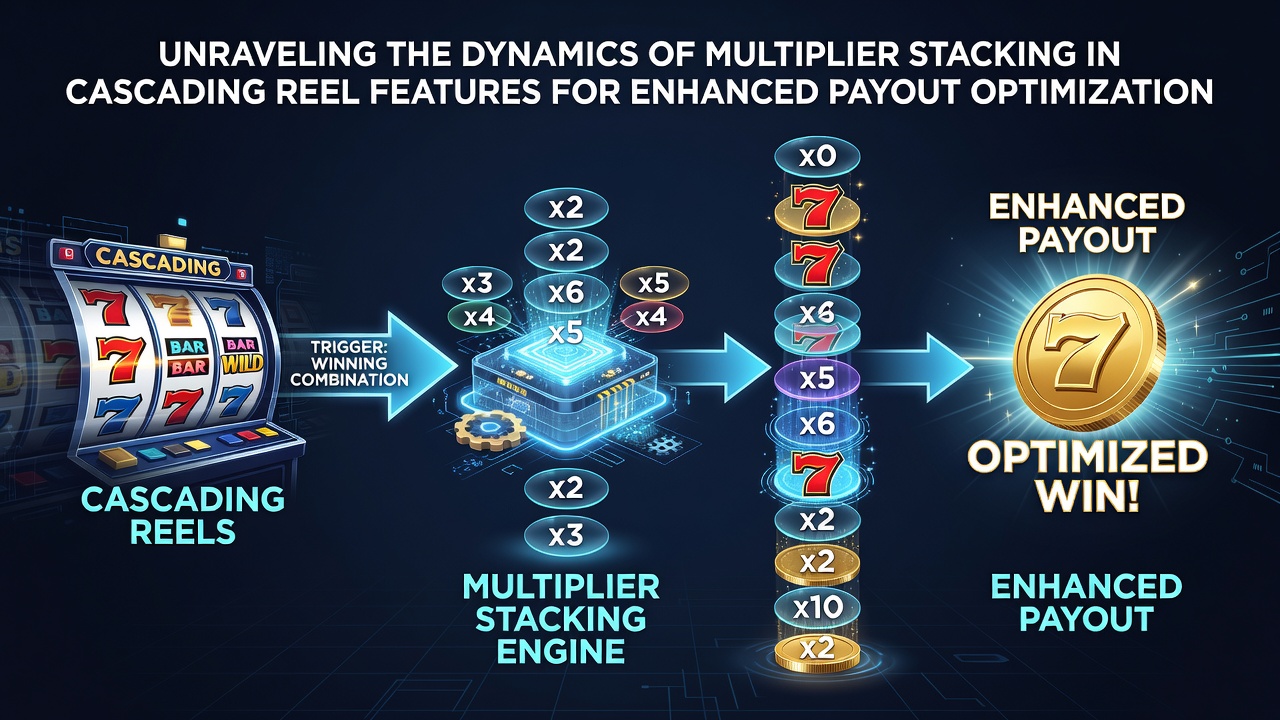
Slot mechanics that combine cascading reels with layered multipliers create chain reactions where one win triggers successive drops and increased payout values, and developers have refined these systems across numerous titles since the early 2010s. Research from gaming laboratories shows that each cascade removes winning symbols, shifts remaining icons downward, and fills empty positions from above, while multipliers often accumulate through dedicated meters or progressive indicators that rise with every consecutive tumble.
Data from industry reports indicate that stacking occurs when a base multiplier, frequently starting at 1x, increments by set amounts such as +1x or +2x per cascade, and some configurations apply the updated value only to the current sequence or carry it forward to later stages. Observers note that certain games introduce wild symbols during cascades that both substitute for paying icons and add extra multiplier boosts, which compounds totals when multiple wilds land in sequence.
Core Components of Cascading Systems
Engineers design reel grids typically measuring five columns by three or four rows, although variations extend to six or seven reels with additional rows that expand during active cascades. According to analyses published by the American Gaming Association, the random number generator determines symbol placement after each drop, yet predefined rules govern multiplier progression so that players encounter predictable growth patterns within the game's mathematical model. Those who've examined paytables find that some titles cap multipliers at 20x or 50x, whereas others allow unlimited stacking until the cascade sequence ends and the round resets to the base level.
Additional layers appear in games that attach multipliers to specific symbols or reel positions, and these values combine through multiplication rather than addition when they interact during a single cascade chain. Figures from testing facilities reveal that the frequency of extended cascades depends on volatility settings, with higher-volatility titles producing fewer but potentially larger stacked outcomes compared to lower-volatility counterparts that deliver more frequent yet smaller increments.
Mathematical Interactions During Sequences
Each winning combination removes symbols and awards credits based on the active multiplier at that moment, then the system recalculates new wins with the updated multiplier value for the next drop. Researchers at the University of Nevada's gaming studies program documented that this sequential application creates exponential growth potential when four or five cascades occur in succession, although the probability decreases sharply with each additional step due to the fixed symbol distribution. Game designers sometimes embed features where a cascade count tracker unlocks bonus multipliers after reaching thresholds such as three or five consecutive drops, and these thresholds appear in both base game and feature rounds.
Payline structures influence stacking outcomes because some implementations evaluate wins only on fixed lines while others use ways-to-win or cluster-pay systems that allow more symbols to participate in cascades. Evidence from regulatory submissions in Nevada and New Jersey demonstrates that return-to-player percentages remain constant regardless of stacking depth, since the increased multipliers balance against the reduced frequency of long sequences within the overall math model. Players often encounter buy-feature options that guarantee an initial multiplier start or force additional cascades, and these mechanics alter the distribution of stacked results without changing the underlying probabilities.
Implementation Variations Across Providers
Different software studios apply distinct rules for how multipliers reset or persist between spins, with some carrying forward partial values into free-spin rounds while others reset entirely after each base spin concludes. Case examples from titles released between 2022 and 2025 show integration of cascading multipliers with expanding reels or progressive jackpots, where the stacked value contributes to jackpot qualification thresholds. Those examining source code and game rules note that visual indicators such as rising flames or accumulating orbs accompany the numerical increases, providing clear feedback on current stacking levels during active sequences.
Testing data collected by independent labs confirm that visual and auditory cues remain synchronized with multiplier updates to maintain transparency, and this synchronization helps clarify when a new high value applies to the next cascade. Regulatory frameworks in regions including Malta and Australia require clear disclosure of multiplier caps and reset conditions in game rules, ensuring consistent presentation across markets. In July 2026 several providers plan to introduce updated engines that allow selective stacking persistence across multiple spins under specific conditions, expanding the range of available configurations.
Conclusion
Multiplier stacking within cascading reel frameworks operates through defined increment rules, sequential evaluation, and probability balancing that together determine payout patterns across thousands of spins. Documentation from multiple testing authorities and academic examinations outlines how these elements combine without altering the fixed return-to-player percentage, and ongoing development continues to refine the visual and structural presentation of stacking mechanics. Players reviewing game information can identify specific stacking behaviors by examining paytables and rules sections that detail increment values, caps, and reset triggers for each title.